






Architecture
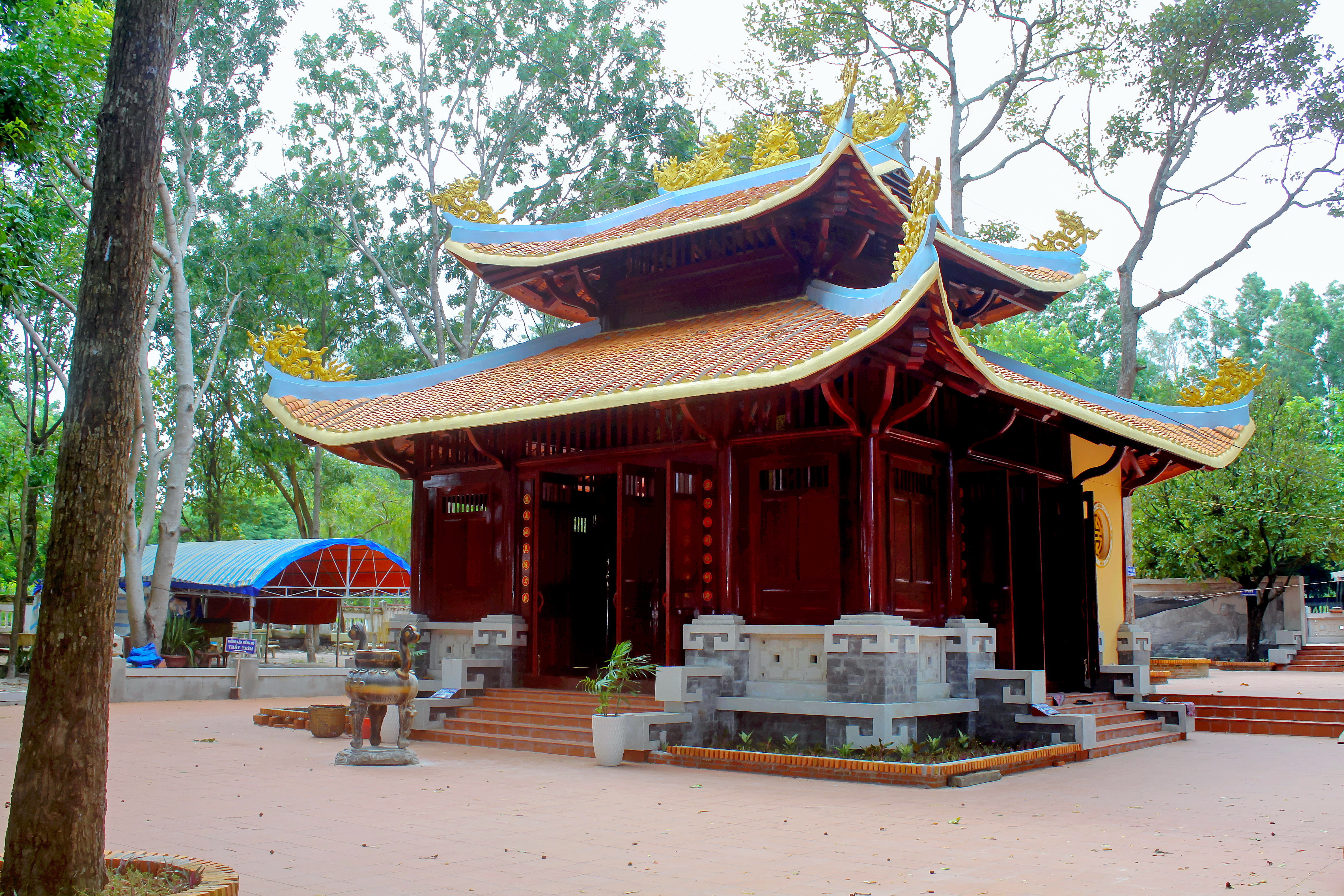
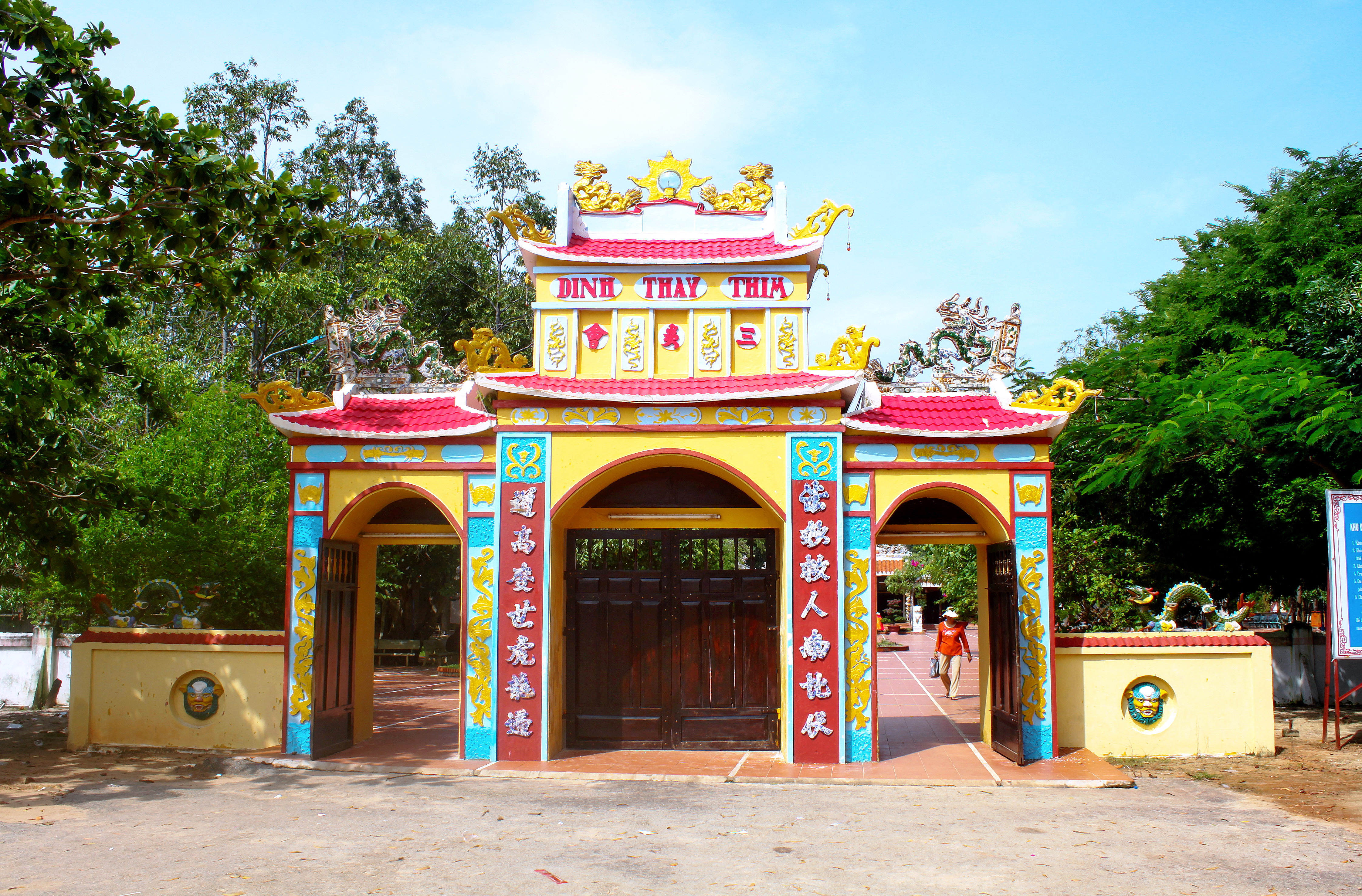
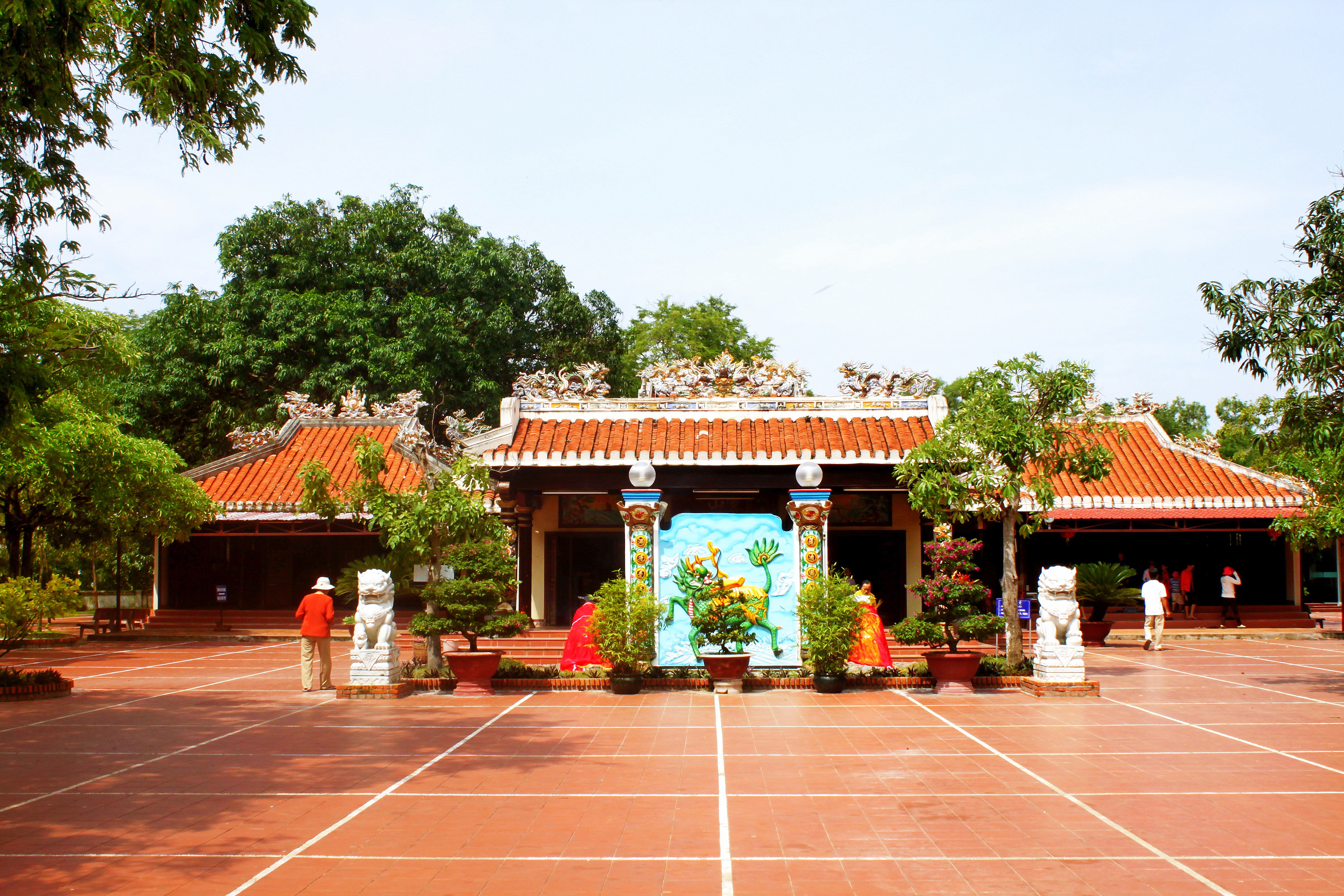
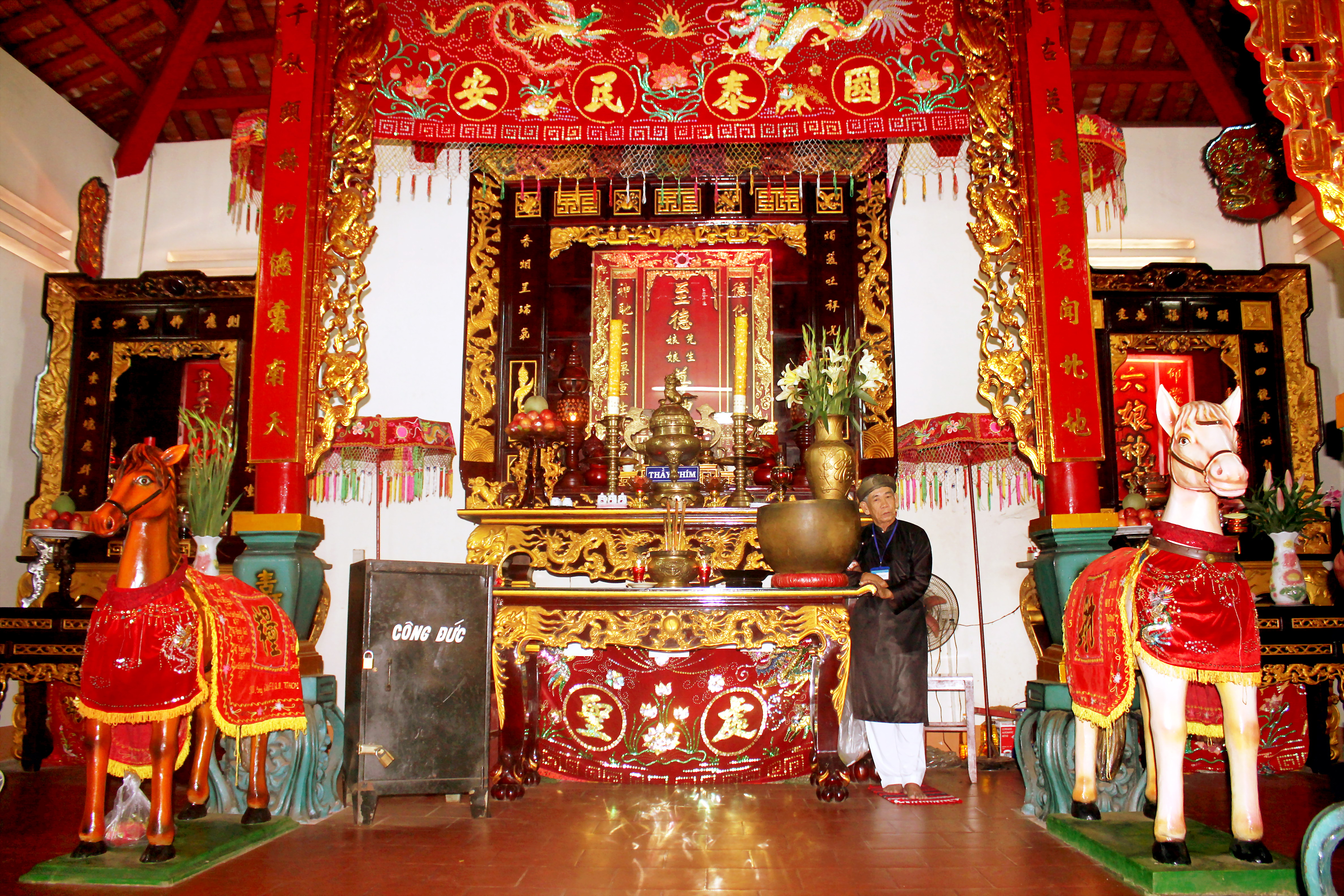
Dinh Thầy Thím is designed in the style of a traditional Vietnamese communal house, consisting of many structures such as the Three-Gate Entrance (Tam Quan), Võ Ca stage, Main Hall, the Ancestral Hall for the Early Founders (Tiền Hiền), the Hall for Later Founders (Hậu Hiền), Tiger Shrine, Village Guardian Shrine, Traditional Room, and more.
On one of the temple beams, there is an engraved Chinese inscription reading: “Kỷ Mão niên thập nhị nguyệt nhị thập ngũ nhật kiến tạo,” which means “Constructed on the 25th day of the 12th lunar month of the Year of the Cat (1879).”
The architecture, carvings, decorative arts, and interior ornaments of Dinh Thầy Thím clearly reflect the style of royal court architecture.
The temple dedicated to Thầy and Thím is located near their burial site.
Legend
According to legend, long ago in Quảng Nam, there lived a Taoist master known for his compassion and extraordinary martial arts skills. He frequently helped the poor and was greatly admired by local villagers. However, after being falsely accused and unjustly punished by the king, he and his wife fled southward to escape persecution.
Tam Tân, a remote yet prosperous countryside, became the final place where the couple settled. From that time onward, stories about their kindness and virtue spread widely among the people. The villagers respectfully called them “Thầy” (Master) and “Thím” (Madam).
 Although Thầy rarely spoke about his past, the villagers understood some parts of his life story. He was born during the early Gia Long dynasty. As a young man, he diligently studied literature while also learning spiritual and martial arts, hoping to dedicate himself to helping society. Before he could achieve his ambitions, both his parents suddenly passed away. As a devoted son, he stayed in his hometown with his wife to mourn and live through difficult years.
For many consecutive years, the region suffered severe droughts and crop failures. Moved by the suffering of the people, Thầy held a prayer ceremony. Although the sky had been clear, thunder suddenly roared and heavy rain poured down, reviving the land and vegetation.
From then on, Thầy became famous as a spiritual master who used his powers to help ordinary people. During a New Year festival, villagers dreamed of having a magnificent communal house like the neighboring village’s đình. That same night, violent storms and lightning shook the heavens. By morning, the villagers were astonished to find a brand-new communal house standing in place of their old deteriorated one.
However, the neighboring village accused Thầy of magically stealing their đình and plotting rebellion. The king sentenced him to the highest punishment. Yet, impressed by Thầy’s noble spirit, the king allowed him to choose among three forms of execution: beheading, poison, or hanging.
Thầy requested a pink silk cloth and chose hanging. Miraculously, when he performed a martial dance with the silk, it transformed into a dragon and lifted both Thầy and Thím into the sky before the terrified eyes of officials and villagers. As they flew over their homeland, Thím dropped one of her shoes as a farewell message before the dragon carried them southward.
Eventually, they arrived in Tam Tân village (now part of Tân Hải Commune, Lâm Đồng Province according to the story) and lived quietly as settlers from another region.
At first, the couple stayed with a man named Hộ Hai. They earned a living by cutting wood, building boats, and healing the sick with herbal medicine. People noticed that Thầy always carried a dried gourd believed to possess magical powers capable of “turning beans into soldiers.” One day, while Thầy was away in the forest, the homeowner curiously opened the gourd, causing flames to burst out and burn the house down. After rebuilding the home for Hộ Hai, the couple moved deeper into the forest near Bàu Cái to avoid public attention.
Yet the farther they lived from civilization, the more famous Thầy became. He built boats for fishermen and always delivered them on time. Although people constantly heard sounds of woodworking throughout the forest, no one ever saw assistants helping him. A small waterway stretching over 3 kilometers from the forest to the sea was believed to have been created by Thầy using his staff so boats could reach the ocean more easily. That stream still exists today and is commonly called the “surfing stream.”
Many other stories describe Thầy’s kindness, such as punishing rice merchants who exploited poor villagers during famines, rescuing fishermen during storms, and even taming dangerous wild animals that frightened settlers during the early days of land exploration.
One autumn day, news spread that Thầy and Thím had passed away. Villagers hurried to their dwelling place and found two graves made of pure white sand, said to have been built by wild animals near where the couple died.
Every year on the 5th day of the first lunar month, people reportedly saw a pair of White and Black Tigers returning to guard and pay respects at the graves.
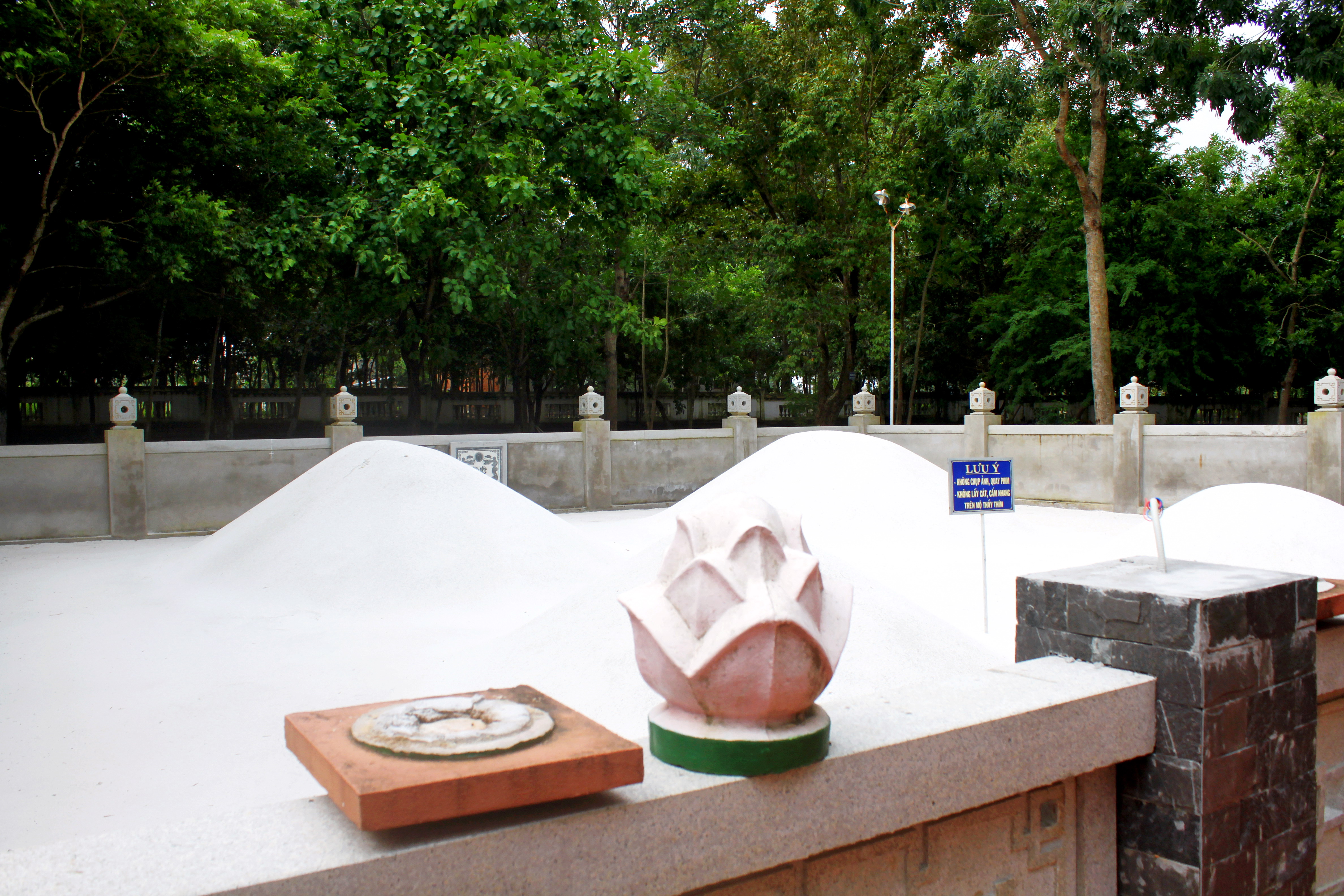
After the two tigers died, villagers buried them behind Thầy and Thím’s graves to honor their loyalty. Every year on the 15th day of the 9th lunar month, people hold the Autumn Ceremony to commemorate Thầy and Thím. Through incense smoke and solemn temple bells, their compassion and virtue continue to live on in folk tradition.
During the 18th year of Emperor Thành Thái’s reign, the royal court officially reviewed the old judgment and granted them the honorary titles: “Chí Đức Tiên Sinh” and “Chí Đức Nương Nương Tôn Thần,” recognizing them as sacred beings of great virtue.
Festival
Every year, on the 5th day of the first lunar month (the Grave Visiting Ceremony) and from the 14th to the 16th days of the 9th lunar month (the Autumn Worship Festival, also known as the anniversary of Thầy and Thím), thousands of local residents and visitors come to the temple to pray for health, family happiness, and success in business and life.
Related Information
The Tomb Complex of Thầy and Thím, which includes one shrine and four sand graves, is located within Tân Hải Commune, approximately 3 kilometers west of Dinh Thầy Thím.
The four graves are covered with pure white sand and situated behind the shrine. According to folk legend, the two front graves belong to Thầy and Thím, while the two rear graves belong to the White and Black Tigers, believed to be their loyal guardians and disciples.
Since 1988, the heritage management board has constructed a rectangular stone wall surrounding the tomb area, measuring approximately 22 meters by 16.25 meters.
Source: Wikipedia

